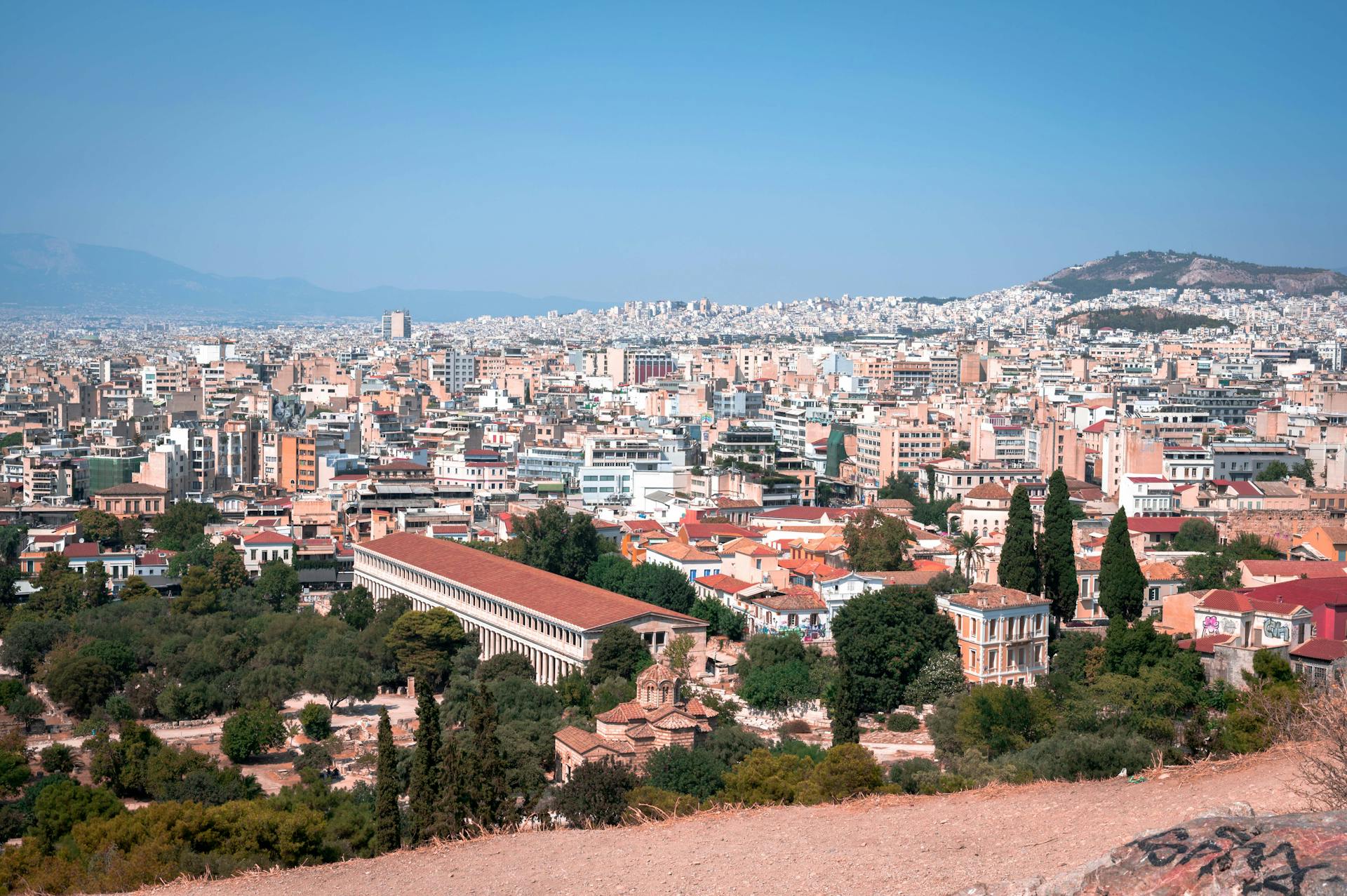
Athens at a glance
Getting around
Use the metro for longer journeys and walk between the central archaeological sites. Buses fill the gaps. For the beaches, the tram runs down to the coast. Ordinary city tickets do not cover airport journeys, so choose an airport fare when travelling to or from the terminal.
Best time to visit
April, May, late September and October are usually easier for sightseeing than July and August. Greek Easter brings candlelit services and celebrations, with changing dates and some closures. Winter is quieter at the ruins, though the days are shorter and wetter.
Weather
Athens has long, hot, dry summers, and a heatwave can make exposed archaeological sites uncomfortable or force temporary closures. Winter is usually mild but can be wet and occasionally cold. Spring warms quickly, while autumn often stays warm well into October.
Budget
Food can be inexpensive in Athens, especially from bakeries and souvlaki shops. A central hotel and several archaeological admissions can still make a short stay costly.
Highlights
Start with the Acropolis, its museum and the Ancient Agora, then see the National Archaeological Museum for finds from across Greece. For live music, try a rebetiko venue, where songs tell of love, exile and everyday hardship.
Safety
Pickpocketing is common on the metro and in crowded central areas, so keep your bag closed and split up valuables. Demonstrations often gather around Syntagma Square. It’s best to keep clear of protest crowds and take a different route if a demonstration is under way.