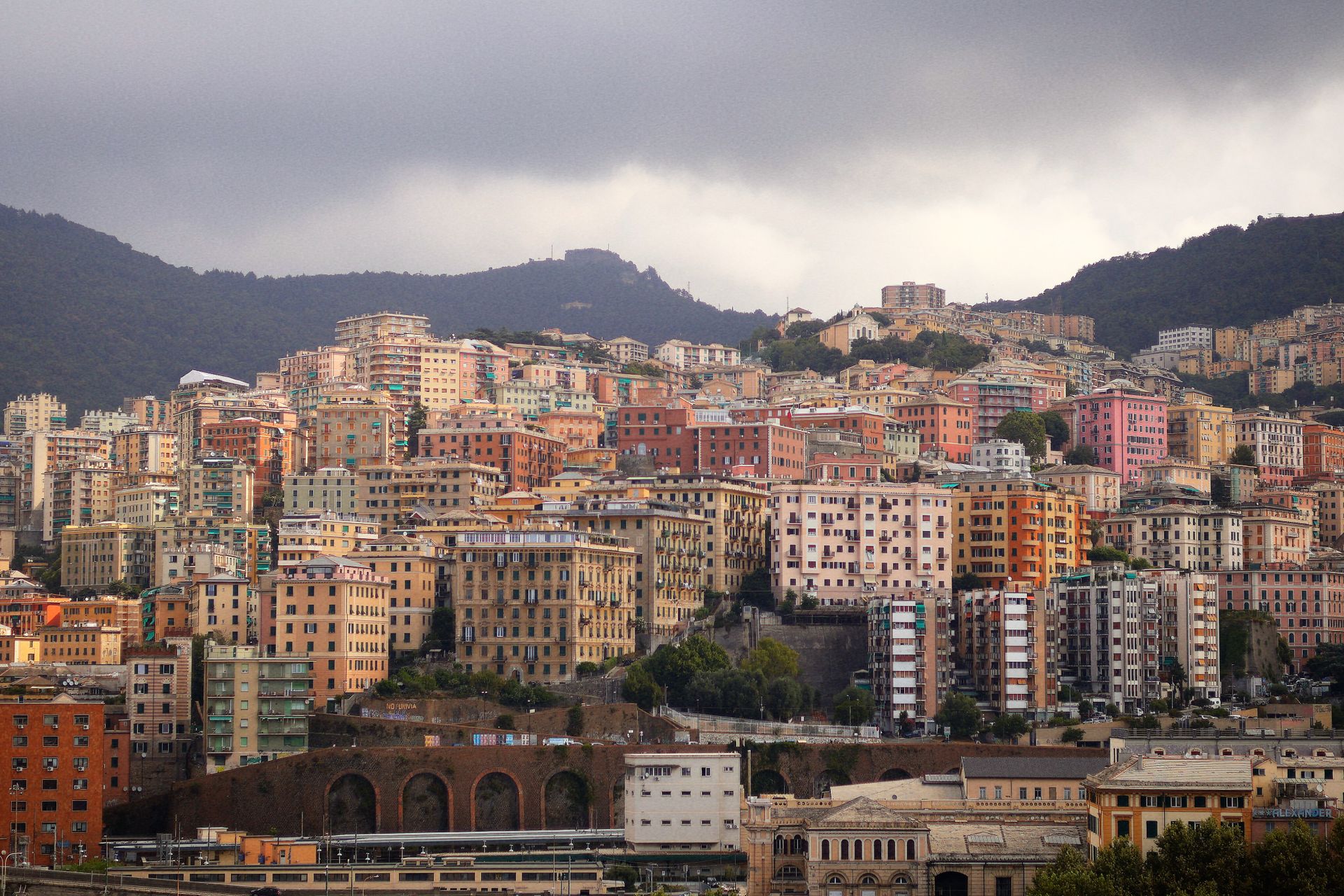
Genoa at a glance
Getting around
The metro and buses are useful for longer journeys, but Genoa’s lifts and funiculars are part of everyday transport too. They save some steep climbs between the centre and hillside districts, with routes and current service notices on the city transport operator AMT’s website.
Best time to visit
May, June and September usually suit exploring the steep streets better than midsummer. Rolli Days, held in spring and autumn, open additional historic palaces to visitors. Book individual visits ahead, and remember that autumn can bring heavy rain.
Weather
The sea softens Genoa’s winters, but wind can make the waterfront feel cold. Summers are warm and humid. Autumn is particularly rainy, sometimes with intense storms; the hills above the city can have different conditions from the sheltered old-town lanes.
Budget
Hotels and the Aquarium are likely to account for more of a family’s budget than food. Bakeries and focaccia shops make simple meals affordable, and much of the old town is free to explore. Several paid attractions in the harbour can make a day there expensive.
Highlights
The Aquarium focuses on marine life, while Galata tells Genoa’s seafaring history and the Rolli palaces reveal its former wealth. Look inside the historic shops too: confectioners, grocers and other long-running businesses preserve elaborate old interiors.
Safety
Keep belongings close in crowded lanes and stations, and keep luggage out of parked cars. Take heavy-rain warnings seriously: Genoa’s steep valleys can flood quickly. Follow municipal instructions and keep out of flooded underpasses and waterside paths.