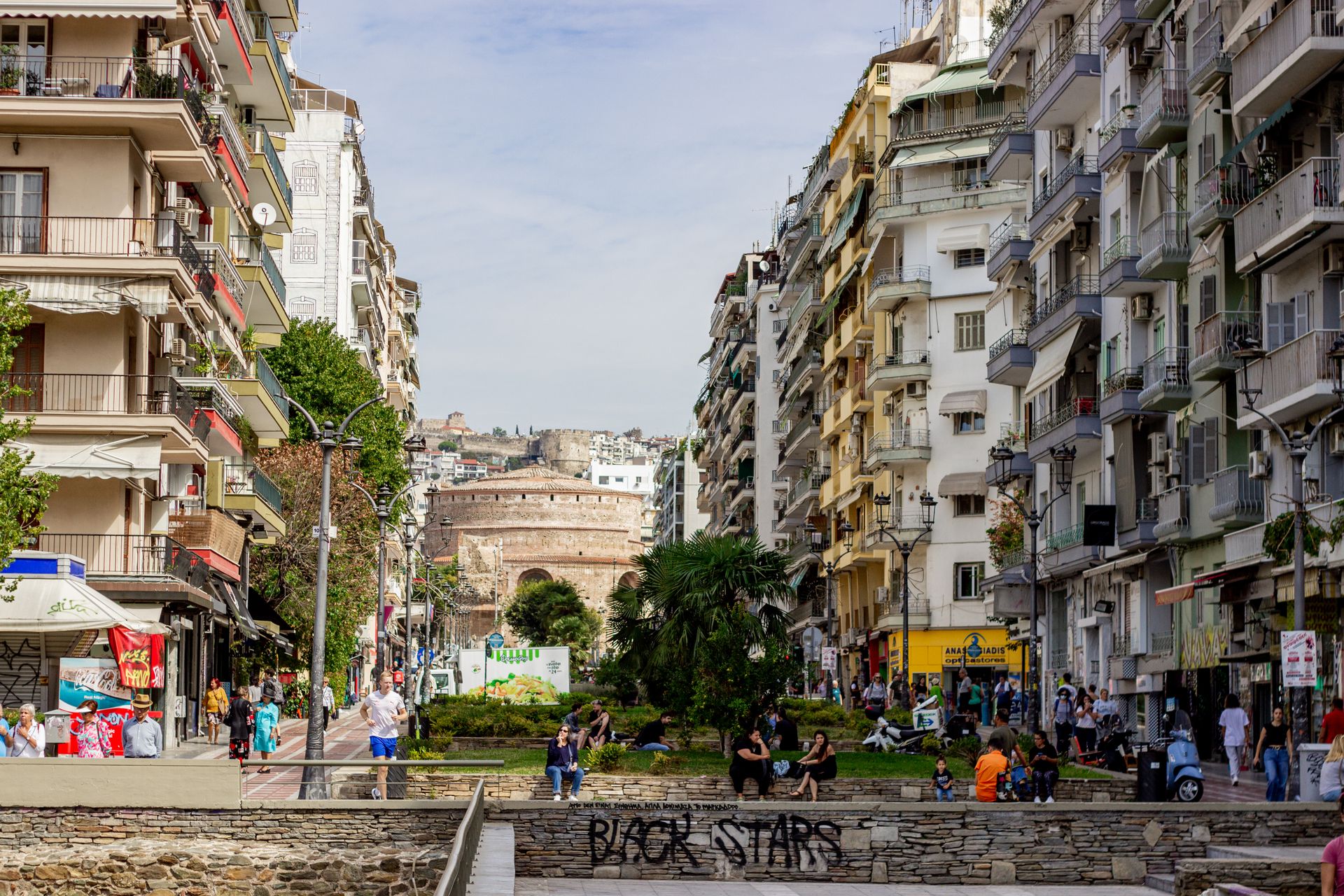
Thessaloniki at a glance
Getting around
Much of the centre and waterfront is easy to walk around. The metro is useful for longer trips across the city, and buses go up to the Upper Town. You'll need separate tickets for the bus and metro if you're using both.
Best time to visit
Walking around is more comfortable in April, May, September and October, away from the strongest summer heat. November’s international film festival brings screenings to city cinemas, though it’s a cooler, wetter time to visit.
Weather
Summer gets hot, especially in July and August, when you may not want to walk around all day. Winter is cool, with chilly nights. Rain is possible all year and becomes more frequent in autumn and winter.
Budget
You don't need to spend much on meals or getting around: gyros shops serve filling, inexpensive food, and local transport is cheap. Somewhere to stay and tickets for several museums are more likely to stretch your budget.
Highlights
The White Tower, Roman Rotunda and Byzantine churches trace the city's long history. At Venizelou metro station, you can see an ancient main street and the remains of shops uncovered while the railway was being built.
Safety
Demonstrations sometimes affect Egnatia Street, Aristotelous Square and the university area. It’s best to keep clear of marches, as clashes can happen and transport may be disrupted.