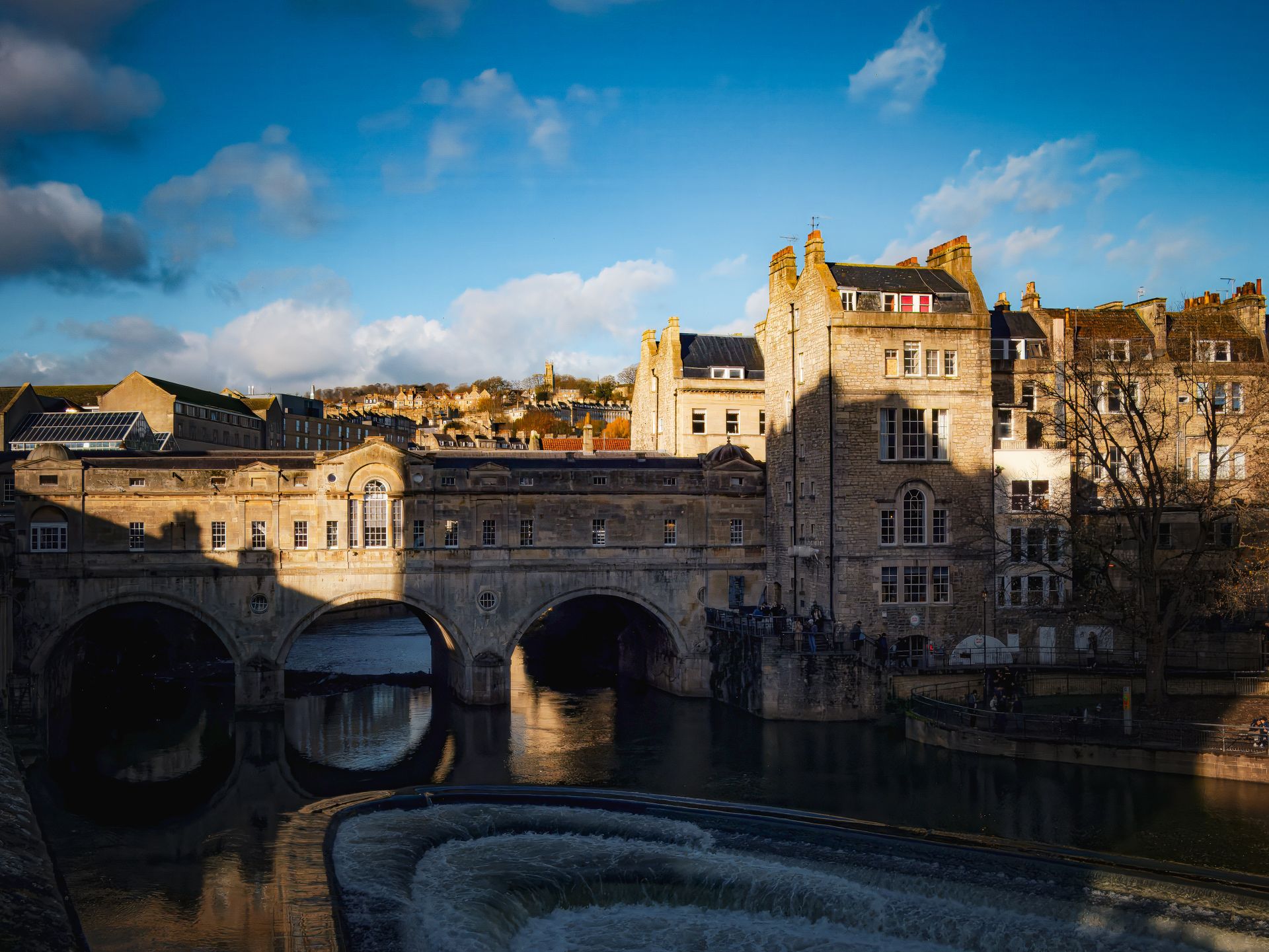
Bath at a glance
Getting around
Walking is the simplest way to see the compact centre, and Bath Spa station is close to the main sights. Local buses are useful for the surrounding hills. If you arrive by car, the Park & Ride sites save you driving into the centre.
Best time to visit
May, June and September are good for gardens and walks around the city. The Christmas Market, usually from late November to mid-December, fills the centre with stalls selling gifts and food, but weekends can be very busy.
Weather
Bath is generally mild, with warm summer days and chilly winters. Rain is possible in any month, so it helps to have a waterproof for walks around the city. Autumn and winter tend to be wetter.
Budget
Hotels, the Roman Baths and a spa visit can make Bath an expensive break. There’s still plenty to enjoy for free, including its Georgian streets, parks and walking tours led by the Mayor of Bath’s volunteer guides.
Highlights
The Roman Baths show you how people bathed and worshipped here nearly 2,000 years ago. For Georgian history, No. 1 Royal Crescent lets you look inside a house furnished as it might have been in the late eighteenth century.
Safety
Bath feels relaxed, but the paths along the Avon are dark and unfenced at night, so lit streets make the better route home. The steep streets up towards Lansdown and the Royal Crescent can be slippery in rain or frost.